
BPC-157
€84.90
If you are researching where to buy bpc-157 20mg, evaluate suppliers using documented quality and compliance criteria rather than unsupported claims about healing, effects, or tissue repair.
BPC 157: What It Is, Research Findings, Safety, and Legal Status — What Is TB-500?
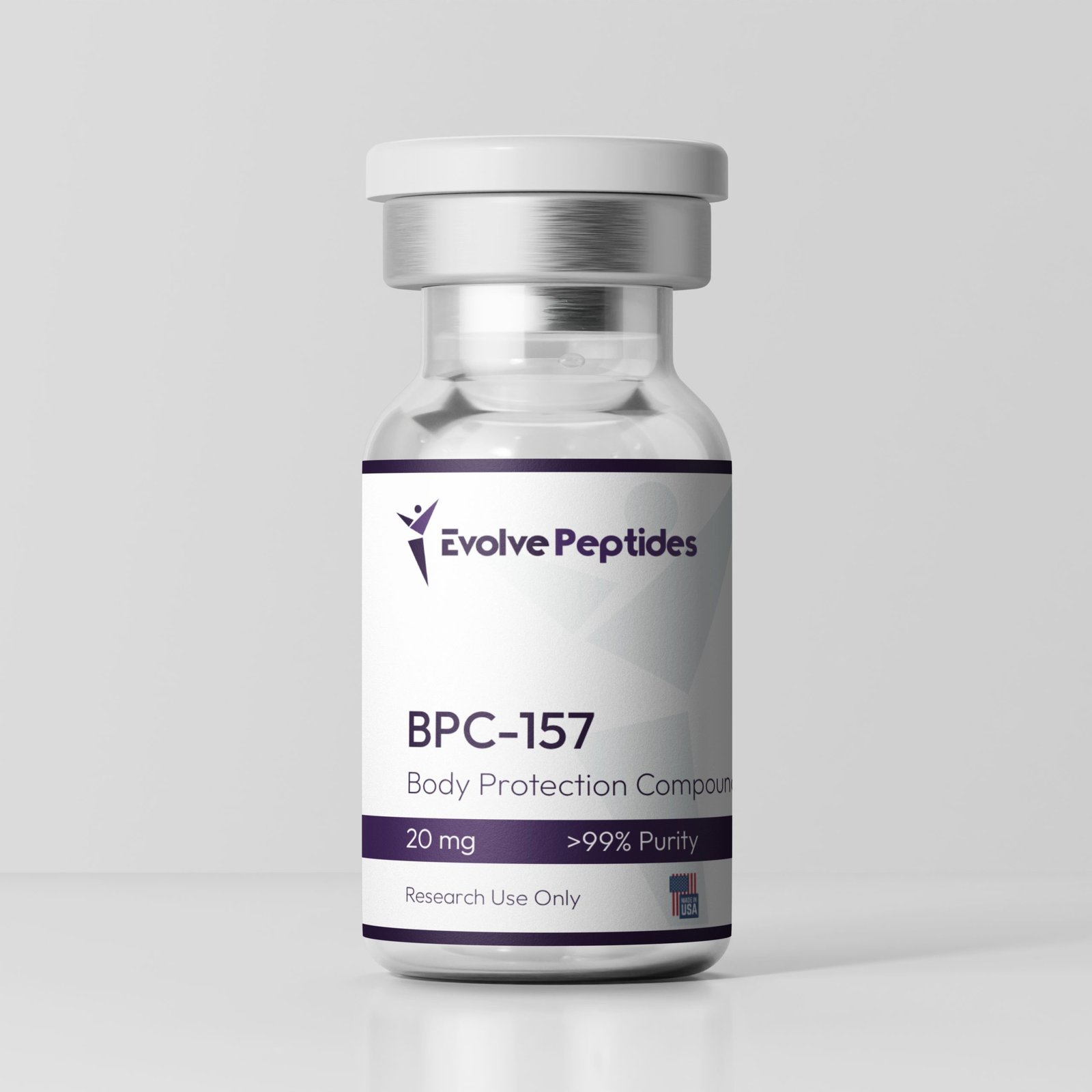
Body Protection Compound 157 (BPC-157 20 mg) is a synthetic peptide made from 15 amino acids. It is often described as a pentadecapeptide, meaning a peptide containing 15 amino-acid units. The term “body protection” refers to the compound’s original research name, not to a proven protective effect in people. BPC-157 was derived from a sequence associated with human gastric juice and has been examined mainly in laboratory and animal studies.
Peptide is a short chain of amino acids that can participate in biological signaling. Preclinical research means research conducted in cells, tissues, or non-human animals before a treatment is tested in well-controlled human trials. Current evidence does not establish that bpc 157 provides proven medical benefits, improves healing, or treats an injury in humans. A scientific review should therefore distinguish laboratory findings, animal results, anecdotal reports, and clinical evidence.
What Is TB-500?
TB-500 is a separate research compound associated with a synthetic fragment related to thymosin beta-4. It is not the same peptide as BPC-157, and the two compounds should not be treated as interchangeable. Claims about combined use, protection, recovery, or healing remain insufficiently established by high quality human studies. Neither compound is FDA-approved for human treatment or self-administration. Anyone evaluating these substances should rely on current regulatory information and qualified medical guidance rather than online claims or anecdotal benefits.
Observed Effects of BPC-157 in Preclinical Healing Studies
Laboratory and animal studies have examined whether bpc 157 may affect healing, tissue repair, and recovery after injury. These studies report biological effects in specific experimental models, but they do not establish that BPC 157 is effective or safe for people. Results can vary according to the species, study design, dose, route of administration, injection method, comparator, and follow-up period. The findings below should therefore be read as research observations rather than treatment recommendations.
Wound Healing and Blood-Vessel Formation
Some preclinical studies have evaluated BPC-157 in models of chemical burns, skin wounds, and soft-tissue damage. In certain rats and other laboratory animals, treatment was associated with changes in wound closure, granulation tissue, reepithelialization, and collagen deposition. These are separate stages of healing: wound closure describes the visible reduction of an open wound, while tissue repair involves the underlying restoration and remodeling of damaged tissue.
Research has also examined whether bpc 157 may influence angiogenesis, the formation of new blood vessels. In some models, the peptide was associated with changes in endothelialcell migration, cell growth, and vascular signaling. New blood vessels can deliver oxygen and nutrients to injured tissue, but increased vessel formation is not automatically beneficial in every medical condition. The results should be interpreted alongside the animal species, injury model, concentrations used, and study limitations. Rodent findings do not prove that BPC-157 improves wound healing in humans.
Tendon and Ligament Research
Animal studies have investigated bpc 157 in tendon and ligament injury models, including models involving transected Achilles tendons. In some rats, administration was associated with changes in fibroblast activity, collagen-fiber organization, bloodvessel development, and mechanical or functional outcomes. These observations may help researchers study tendon healing and ligament repair, tissues that can recover slowly because of their structure and blood supply.
Muscle and Bone Repair
Preclinical models have explored possible effects on muscle regeneration, bone healing, and tissue growth after injury. BPC 157 may be associated with fibroblast activity, vascularization, and signaling pathways involved in remodeling. Other experiments have examined muscle wasting and fracture models, including conditions involving steroid-related damage. In some animal studies, changes in osteoblast activity or fracture-healing measures were reported, but the results cannot be assumed to apply to human bone injuries.
Neurological Research
Preclinical studies have investigated whether BPC 157 may affect nerve recovery after traumatic brain injury, spinal cord injury, or peripheral nerve damage. In some rats, researchers observed changes in tissue responses, movement, or markers associated with neural repair. Other studies examined possible effects on dopamine and serotonin pathways, oxidative stress, and cell signaling. These mechanisms remain hypotheses requiring further investigation rather than established explanations for the reported effects.
Neuroprotection in an animal model does not demonstrate protection in humans. Human evidence remains limited, and available research does not establish a safe dose, proven benefit, or appropriate treatment protocol for stroke, neurodegeneration, or nerve injury. A change in behavior or laboratory marker is also not equivalent to meaningful neurological recovery.
Inflammation and Nitric Oxide Signaling
Research in animal models has examined BPC-157’s possible effects on inflammation, cytokine activity, soft-tissue injury, and arthritis-like conditions. Some experiments reported less swelling or tissue degradation, while others evaluated collagen, blood-vessel responses, and tissue repair. BPC-157 may influence inflammatory signaling and nitric oxide pathways, but nitric oxide is biologically complex: its effects can vary by concentration, location, timing, and underlying condition. It should not be described as uniformly beneficial.
What Is the Wolverine Stack?
“Wolverine stack” is an informal term with no consistent medical or scientific definition. Online discussions may use it to describe combinations of BPC-157, TB-500, or other research compounds. There is not enough high-quality human evidence to confirm that combining these substances improves healing, repair, or recovery, and combination use may create unknown risks. Do not treat this label as a validated treatment or dosing recommendation. Overall, the evidence consists mainly of animal studies with varying protocols and limited sample sizes, so further research is needed before any clinical conclusions can be drawn.
How to Evaluate BPC-157 Research-Peptide Quality
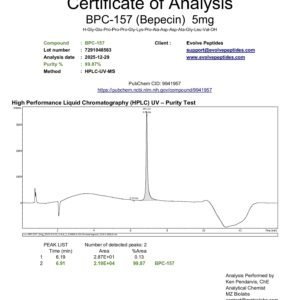
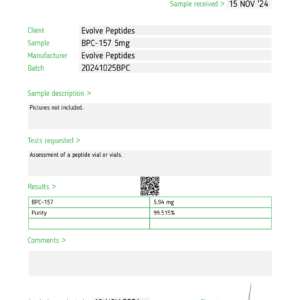
When you buy bpc 157 for laboratory research, product documentation and quality-control procedures can affect the reliability of study results. Impurities may change experimental outcomes, interfere with biological activity, or make it difficult to reproduce findings. However, a product’s stated purity does not establish safety, effectiveness, or suitability for human administration or injection. Researchers should review the available documentation before using any research compound.
High Performance Liquid Chromatography (HPLC): Helps measure purity and identify some contaminants or byproducts.
Mass Spectrometry (MS): Helps confirm molecular mass and peptide identity.
Microbial or Sterility Testing: May assess contamination risk, but the specific test and its limitations should be clearly documented.
Lyophilization (freeze drying): May help preserve a peptide during storage when validated conditions are followed.
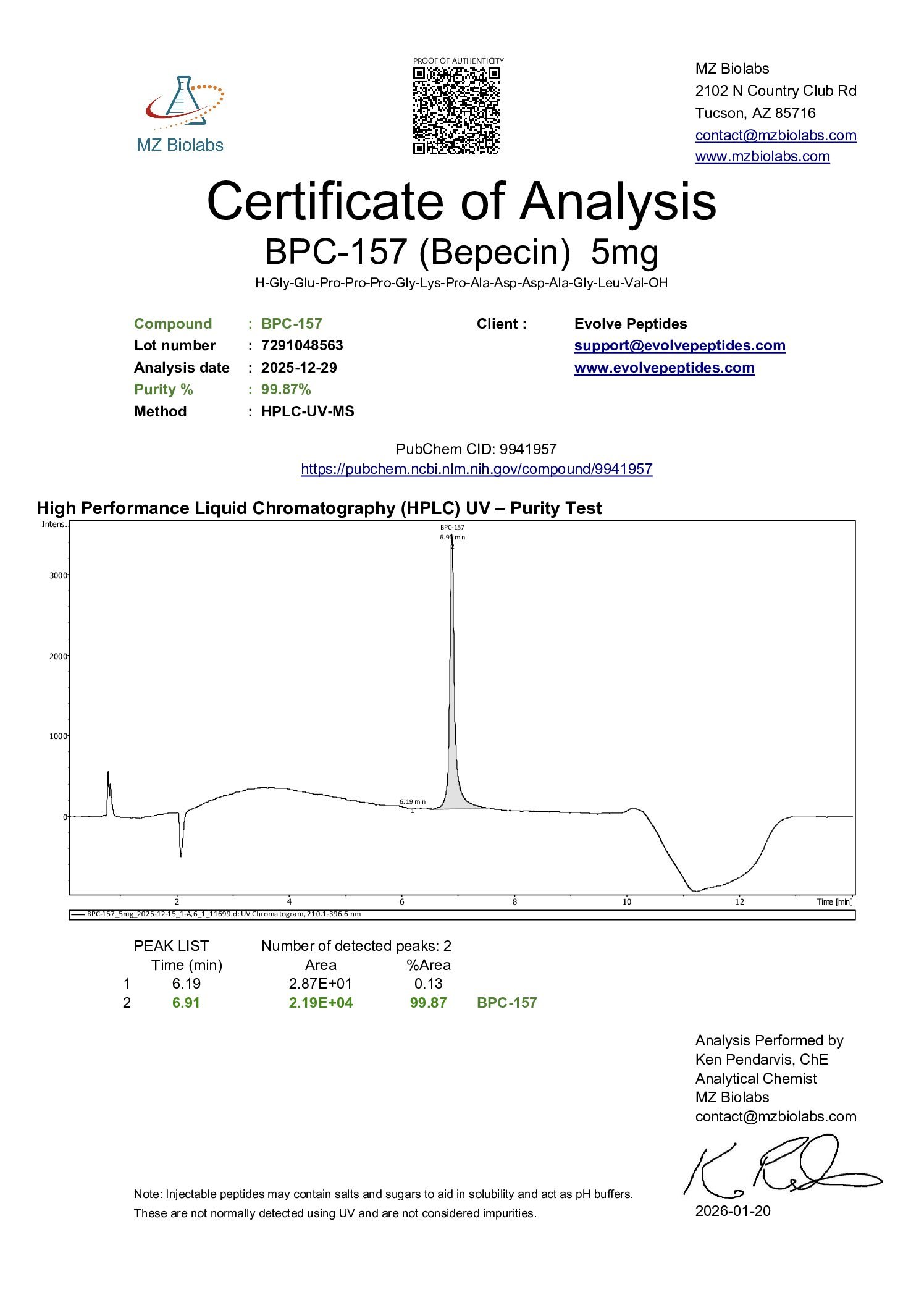
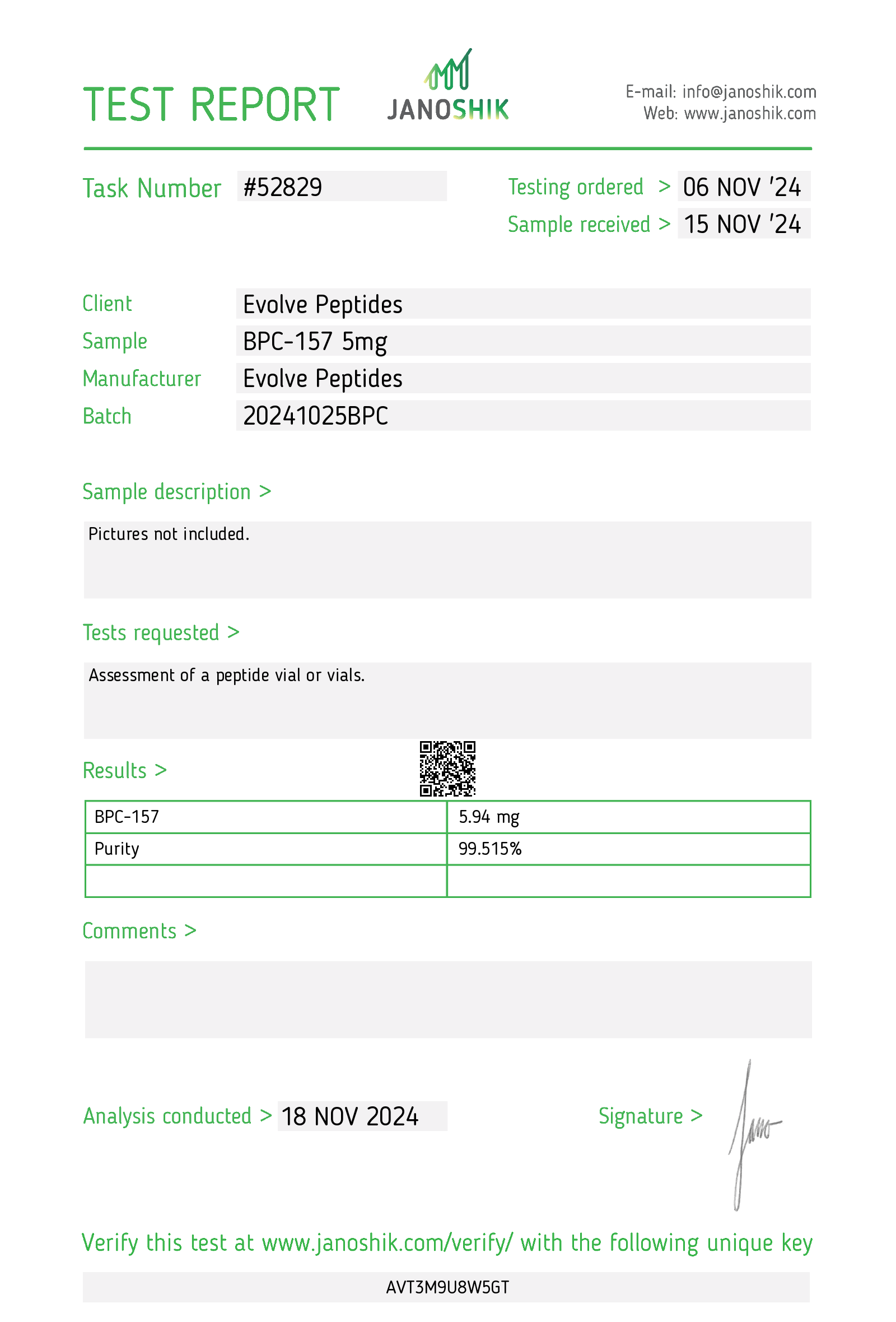
A certificate of analysis (COA) should identify the product and lot number, test date, analytical methods, reported concentrations or purity, identity results, and the testing laboratory. Where applicable, researchers should also confirm the manufacturer’s quality certifications, manufacturing location, storage requirements, and chain of custody. HPLC and MS results alone do not prove sterility, long-term stability, clinical safety, or therapeutic effects. A careful review of the evidence and product records is essential, especially because research protocols and concentrations may differ between studies.
Evolve Peptides states that its BPC-157 products undergo third-party testing and that COAs are available. Those claims, including any stated purity percentage, ISO or cGMP status, and independent-testing policy, should be verified against current batch-specific documentation. Evolve Peptides also supports customer-requested independent testing under its stated replacement policy. This information may help researchers assess a product, but it should not be interpreted as proof that the compound is approved for human use.
How to Take BPC-157?
There is no validated human dose, cycle, fasting rule, or administration protocol for bpc 157 established by regulatory authorities. Research has examined different routes, including oral administration and injection in animal models, but results from those studies cannot be used to create a safe treatment plan for people. The fact that BPC 157 is a peptide associated with a sequence found in gastric proteins does not prove that it remains stable in the digestive tract, reaches the intended tissue, or produces reliable benefits when taken orally.
Anyone researching where to buy bpc 157 should evaluate legal labeling, batch-specific testing, storage documentation, and the limits of the available evidence rather than selecting a product based on claims about effects or benefits. BPC-157 may be useful as a subject of laboratory investigation, but its administration and potential role in human repair remain uncertain.
Note: BPC 157 has not been established as an approved oral or injectable treatment. Available research does not provide a confirmed human protocol for dose, route, fasting, duration, or monitoring. Consult an appropriately qualified professional for medical concerns involving healing, injury, inflammation, or tissue damage.
BPC-157 Side Effects and Research-Use Safety
Animal studies have not established a complete safety profile for bpc 157, and the absence of consistently documented severe effects is not proof that the peptide is safe. Human studies, particularly long-term studies, remain limited. Anecdotal reports may mention dizziness, nausea, appetite changes, increased energy, or restlessness, but these reports cannot establish frequency, cause, or a reliable relationship with BPC-157. Other concerns include contamination, mislabeling, variable concentrations, immune reactions, unknown drug interactions, and possible damage associated with unapproved administration.
BPC 157 may have a possible role in preclinical research, but no established benefits, treatment protocol, or human protection from disease or injury has been confirmed. Results from animal models cannot predict all effects in people. Anyone experiencing symptoms after using an unapproved compound should seek appropriate medical advice, especially when symptoms involve breathing, severe pain, bleeding, neurological changes, or an allergic reaction. Do not use this research product for self-treatment, and do not assume that a product labeled for research is suitable for human use.
BPC-157: Legal Status and Compliance
BPC-157 is not FDA approved for human consumption, disease treatment, or general medical use. The legal status of purchasing, possessing, importing, advertising, or distributing research peptides can vary by country, state, and intended use. Sports organizations may also restrict particular substances. Readers should check current guidance from relevant regulators, customs authorities, sporting bodies, and qualified legal professionals before ordering or handling any peptide. Statements that a product is available for laboratory research do not authorize self-administration or establish regulatory compliance.
How Much GHK-Cu Should I Inject Daily?
GHK-Cu is a different peptide-related compound from BPC-157 and TB-500. This article cannot provide a personal daily injection dose, and no numerical dose should be inferred from research-product labeling or online discussions. A licensed medical professional must determine whether any approved medical option is appropriate for a specific person.
How Much GHK-Cu to Inject?
There is no personal injection recommendation here. GHK-Cu products may differ in formulation, concentration, purity, and legal status, and an injection can create risks that are not addressed by laboratory testing. Do not combine GHK-Cu with BPC-157, TB-500, or other unapproved substances without qualified medical oversight.
Where to Buy BPC-157
If you are researching where to buy bpc 157, evaluate suppliers using documented quality and compliance criteria rather than unsupported claims about healing, effects, or tissue repair. Evolve Peptides states that it supplies BPC-157 for laboratory research and that its products are manufactured under quality-control procedures. Current claims about ISO certification, third-party testing, purity, shipping, returns, and replacement terms should be confirmed through official, batch-specific documentation before ordering.
Look for a current certificate of analysis (COA) that matches the product lot number and identifies the testing laboratory, test date, analytical methods, peptide identity, and reported purity. HPLC may help assess purity, while mass spectrometry may help confirm identity. These tests do not prove that a product is sterile, clinically effective, safe for injection, or suitable for human use. A research peptide should also have clear labeling, storage requirements, contact details, transparent policies, and a statement limiting use to lawful laboratory research.
Evolve Peptides states that its BPC-157 products undergo third-party testing and that COAs are available. The company also describes bulk-order support, customer service, and a policy for damaged or incorrect orders. Verify the current terms directly, including wholesale availability, response times, delivery estimates, and any replacement policy. Purchasing a research product does not make it an approved treatment or establish that it improves healing, recovery, or other biological outcomes. Researchers should follow applicable laws and institutional procedures.
BPC-157 FAQs
Can I order BPC-157 in bulk?
Bulk availability and pricing should be confirmed by contacting support@rejuvantalabs.com. What if I’m not satisfied with my order?
For damaged or incorrect orders, review the current return policy and contact support@evolvepeptides.com. How should BPC-157 be stored for research use?
Follow the product’s validated documentation. Temperature conversions should be accurate: 4°C is approximately 39°F, and -18°C is approximately 0°F. Do not assume that storage guidance before reconstitution applies after reconstitution; stability may depend on the formulation, container, light exposure, and time.
BPC-157 FAQs and Key Takeaways
Can I order BPC-157 in bulk?
Bulk availability, pricing, and custom product options should be confirmed directly with support@rejuvantalabs.com. What if I’m not satisfied with my order?
For a damaged or incorrect order, review the current return and refund policy and contact support@rejuvantalabs.com. Confirm the current response-time promise before ordering. How should BPC157 be stored for research use?
Follow the product specific storage instructions and any available stability documentation. As a temperature reference, 4°C is approximately 39°F, while -18°C is approximately 0°F. Do not assume that storage guidance before reconstitution applies afterward, or that “use promptly” means a specific period unless the manufacturer provides validated data.
Is BPC-157 FDA-approved?
No. BPC-157 is not FDA-approved for human consumption or medical treatment. Are human benefits proven?
No. Current evidence is primarily based on laboratory and animal studies, so BPC-157 may warrant further research, but its effects and potential tissue repair benefits have not been established in high-quality human trials. Can BPC-157 be combined with TB-500 or GHK-Cu?
There is insufficient evidence to confirm that combining these separate research peptides is safe or effective. Should I self-administer BPC-157?
No. Research chemicals should not be used for self-treatment. Before handling a product, review the batch-specific COA, applicable regulations, and current evidence, and consult an appropriately qualified professional about any health concern.
Reviews
There are no reviews yet.